In retail, there’s a reality that everyone knows but few are willing to say out loud: what happens in the store doesn’t depend solely on the campaign—it depends on the execution.
You can have the best design, the most aggressive promotion, the most eye-catching display… but if it arrives late, is set up poorly, or nobody sees it, it doesn’t matter.
The shopper continues on their way. And the opportunity is lost.
Field marketing comes into play right here: where theory ends and the real world begins.
The Real Problem: What Usually Happens in the Store
If you work in retail, trade marketing, or point-of-sale, you’ve surely encountered situations like these:
- Materials arrive… but aren’t assembled.
- A perfect planogram in PDF format, but unrecognizable on the store floor.
- Headers occupied by another brand.
- Promotions posted after the deadline.
- Breaches that no one reports in a timely manner.
- Cluttered shelves that discourage any desire to buy.
- Photos of the campaign’s execution that arrive after the campaign has already ended.
None of these situations has anything to do with strategy.
They all have to do with execution.
And that’s where Field Marketing changes the game.
What Is Field Marketing Really in 2026?
Field marketing isn’t just about “setting things up in stores.”
Nor is it “visiting retail locations.”
In 2026, it’s much more:
- It’s smart execution.
- It means turning strategies into visible, measurable, and well-organized actions.
- It means ensuring that the brand is seen, understood, and chosen.
- It means having useful real-time data so you can take action before you lose sales.
- Above all, it means having someone in the store who thinks like you, not just someone who “follows a script.”
2026 Trends That Are Changing Field Marketing
The industry has evolved, and today we operate in an environment where:
1. The shopper is a hybrid
They compare prices online, make a decision offline, go back to their phone, and ask the salesperson for advice.
If the brand isn’t clearly visible in the store, they choose another one.
2. AI speeds up operations
Demand forecasting, more efficient routing, automatic error detection in shelf photos, facing analysis…
AI is no longer “the future”—it’s part of day-to-day operations.
3. Retail demands speed (with no room for error)
Campaigns don’t wait.
Setting up a booth a day late = a lost campaign.
4. Tactical teams are key
Peak days, product launches, seasonal campaigns…
Brands need the ability to act quickly.
5. Sustainability starts in the store
Recyclable materials, more durable displays, and fewer unnecessary restocks.
6. Real-time data is no longer a luxury
Immediate reports = fewer incidents, greater control, and faster decisions.
This is Field Marketing in 2026.
How Field Marketing Turns Visits into Sales
1. Perfect Store—for real
The concept is no longer an ideal.
It’s a practical approach: product availability, organization, proper product placement, visible prices, intact point-of-sale displays, active product demonstrations, and clear communication.
In a store, “perfect” doesn’t mean “pretty”—it means something you can understand in 3 seconds.
2. Planograms Without Improvisation
A poorly executed planogram costs sales.
In 2026, AI will help detect discrepancies… but someone will have to correct them in the store.
The difference is this:
A “rough” planogram = lost sales.
A precise planogram = an organized category + a confident shopper.
3. Real-time audits: Take action before you lose sales
If a retailer moves your inventory or if there’s a stock shortage, it’s no use finding out at the end of the month.
The brand needs to know this now so it can take action today.
Technologies such as Celero One make it possible to:
- Geotagged photos
- Immediate KPIs
- Incident Alerts
- Execution Validation
- Map Tracking
Execution is no longer a mystery.
4. Promotions that appear when they’re supposed to
A campaign launched too late is pointless.
A poorly organized campaign is confusing.
A campaign launched at the right time sells.
Field Marketing ensures consistency, which is essential during key weeks such as:
- Black Friday
- Christmas
- Mother’s Day
- New Releases
- Cosmetics or Pharmacy Seasonality
5. In-store training
In 2026, the salesperson will still be the key factor.
Setting it up in minutes makes all the difference.
Field Marketing doesn’t just execute—it amplifies awareness at the point of sale, so your brand gets recommended even when you’re not there.
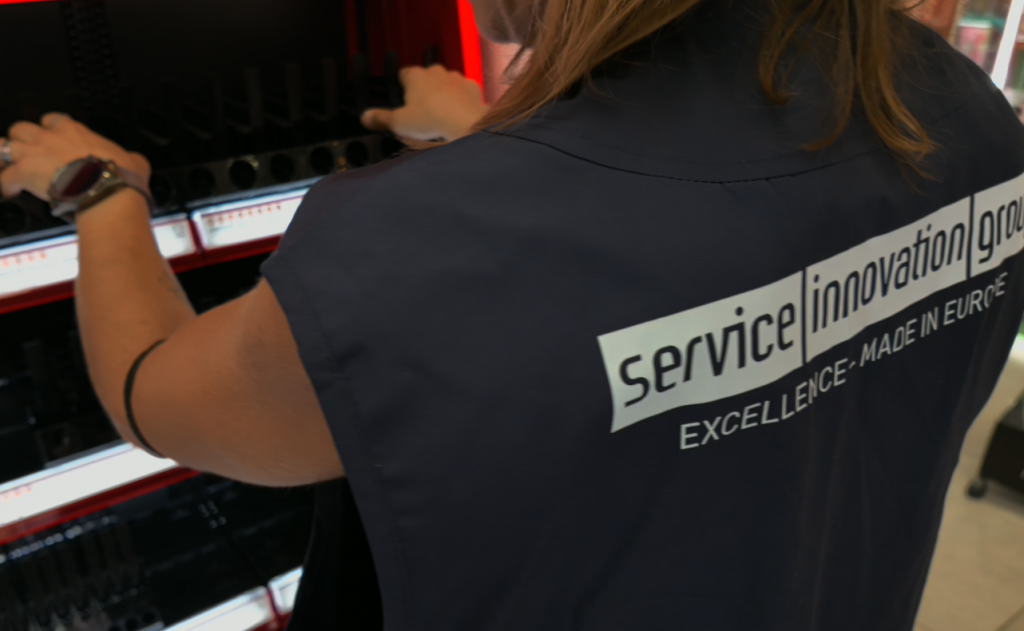
How we solve it at SIG Spain
- Fast and Accurate Service in Spain and Europe
- Real-time technology
- Operational capacity year-round
- A single point of contact for the entire project
- Clear and Controlled Processes
- A European partner with a local perspective
Final Reflection
In retail, the difference between a “visible campaign” and a “campaign that drives sales” lies in what happens in the store.
Field marketing is not an expense.
Nor is it an additional service.
It’s the part of the plan that ensures that everything mentioned above makes sense.
The one that prevents leaks.
The one that turns intent into sales.
The one that makes the brand visible where it really matters.
If you’d like to learn more about how to improve your performance, visibility, or in-store control, there’s plenty we can continue to explore together.